


Introduction
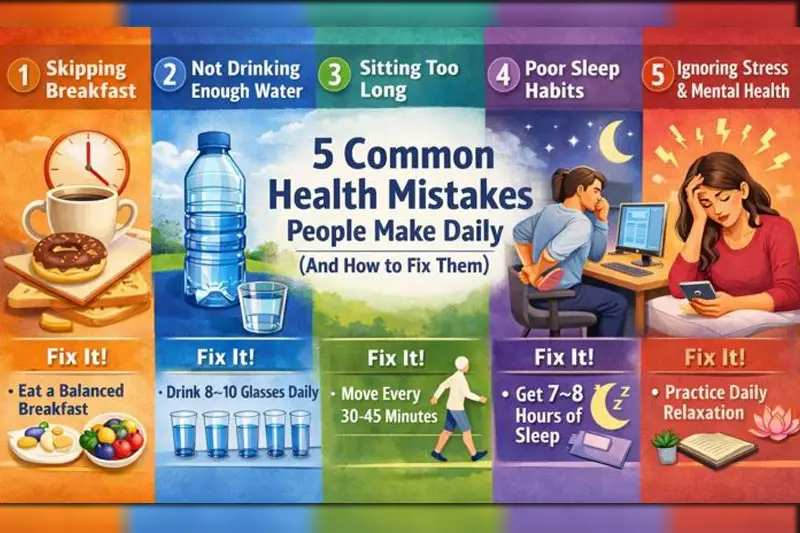
In today’s fast-paced lifestyle, many health problems don’t arise from major illnesses but from small daily habits we often ignore. From poor hydration to excessive screen time, these seemingly harmless routines can silently impact our physical and mental well-being. Backed by medical guidance, practical experience, and wellness research, this article highlights five common health mistakes people make every day—and more importantly, how to correct them before they turn into long-term issues.
1. Skipping Breakfast or Eating an Unbalanced One
Many people either skip breakfast due to busy mornings or consume foods high in sugar and low in nutrients.
Why it’s harmful:
-
Leads to low energy levels
-
Causes overeating later in the day
-
Affects blood sugar balance and metabolism
Expert-backed fix:
Opt for a balanced breakfast with protein, fiber, and healthy fats—such as eggs with whole grains, fruits with nuts, or yogurt with seeds. Nutrition experts consistently emphasize that a nutritious breakfast supports concentration, digestion, and weight management.
2. Not Drinking Enough Water
Dehydration is one of the most common yet overlooked health mistakes.
Why it’s harmful:
-
Causes fatigue, headaches, and poor digestion
-
Affects skin health and kidney function
-
Reduces focus and physical performance
Expert-backed fix:
Drink water consistently throughout the day—not only when you feel thirsty. Health professionals recommend 2.5–3 liters per day, depending on climate and activity level. Keep a reusable water bottle as a visual reminder.
3. Prolonged Sitting and Lack of Physical Movement
Whether working at a desk or scrolling on a phone, many people sit for hours without moving.
Why it’s harmful:
-
Increases risk of obesity and heart disease
-
Weakens muscles and posture
-
Causes back pain and joint stiffness
Expert-backed fix:
Doctors and physiotherapists recommend standing or moving every 30–45 minutes. Simple actions like stretching, short walks, or desk exercises can significantly improve circulation and musculoskeletal health.
4. Compromising Sleep Quality
Late-night screen usage, irregular sleep schedules, and stress often lead to poor sleep habits.
Why it’s harmful:
-
Weakens immunity
-
Affects mental health and memory
-
Increases risk of diabetes and heart disease
Expert-backed fix:
Maintain a consistent sleep schedule and aim for 7–8 hours of quality sleep. Avoid screens at least one hour before bedtime and create a calm sleep environment. Sleep specialists stress that quality sleep is as vital as diet and exercise.
5. Ignoring Mental Health and Stress Levels
Many people normalize constant stress, assuming it’s part of modern life.
Why it’s harmful:
-
Raises blood pressure and anxiety
-
Leads to burnout and depression
-
Weakens immune response
Expert-backed fix:
Mental health professionals recommend daily stress management, such as meditation, deep breathing, journaling, or talking to a trusted person. Even 10–15 minutes a day can make a measurable difference in emotional well-being.
Final Thoughts
Good health is built through small, consistent daily choices. By identifying and correcting these common health mistakes, you can significantly improve your quality of life without drastic changes. True wellness comes from balance—physical, mental, and emotional—and it starts with awareness.